


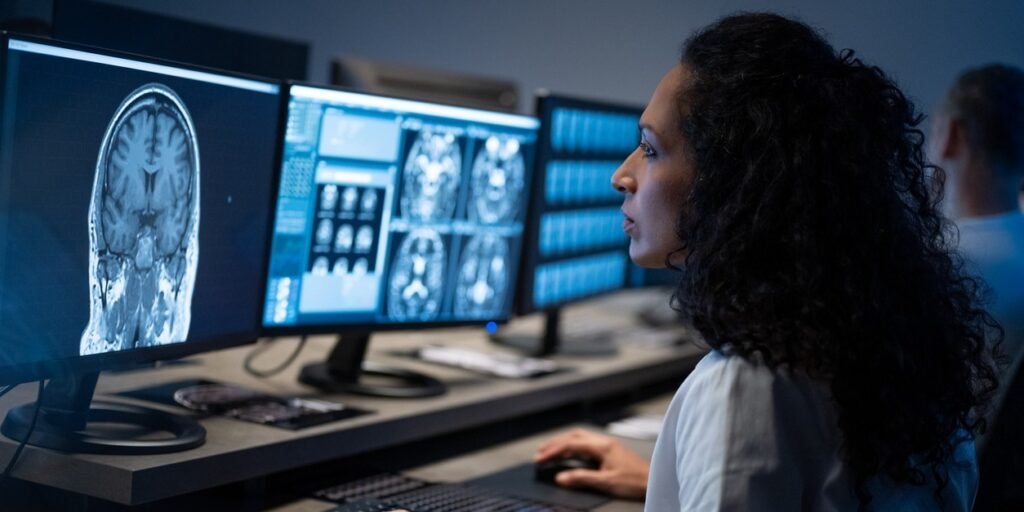
If you’re searching for the latest MRI news, you’re tapping into one of the most dynamic areas of medical technology today. Magnetic Resonance Imaging continues to evolve rapidly, offering clearer pictures of the human body, faster scan times, greater accessibility, and exciting new clinical applications. From artificial intelligence enhancements to helium-free systems and portable scanners, recent developments are transforming how doctors diagnose and monitor conditions ranging from neurological disorders to cancer and heart disease.
This comprehensive guide covers the most important MRI news stories of 2025–2026, explaining what these advancements mean for patients, healthcare providers, and the future of diagnostic imaging. Whether you’re a patient preparing for a scan, a medical professional, or simply curious about health technology, you’ll find clear insights into how MRI is becoming smarter, safer, and more widely available.
AI-Powered MRI: Faster Scans and Sharper Insights
One of the biggest stories in recent MRI news is the integration of artificial intelligence across the imaging workflow. AI algorithms now reconstruct high-quality images from less raw data, dramatically shortening scan times while maintaining diagnostic accuracy. In some cases, patients spend up to four times less time inside the machine, reducing anxiety and improving comfort, especially for children and claustrophobic individuals.
Systems like NYU Langone’s FastMRI initiative, developed in collaboration with Meta, demonstrate how AI can produce clinically interchangeable results with traditional methods. This means radiologists can detect subtle abnormalities earlier while handling higher patient volumes. AI also assists with automated measurements, lesion detection, and even preliminary report generation, helping reduce radiologist burnout and speeding up treatment decisions.
These innovations represent a major leap forward. Traditional MRI scans could take 30–60 minutes or longer for complex studies. With AI assistance, many exams are now completed in under 10 minutes, making the technology more practical for busy hospitals and outpatient centers.
Helium-Free and Low-Field MRI Systems Expand Access
Sustainability and accessibility dominate much of today’s MRI news. Conventional high-field scanners rely heavily on liquid helium, a finite and increasingly expensive resource. New helium-free or low-helium designs are changing that equation. Siemens Healthineers and other manufacturers have introduced virtually helium-free 1.5T systems that are smaller, lighter, and easier to install, significantly lowering operational costs and environmental impact.
Low-field MRI technology is another exciting development. Scanners operating at 0.55T or even lower field strengths reduce metal artifacts, improve safety for patients with implants, and open new possibilities for lung and musculoskeletal imaging. These systems are often more affordable and suitable for smaller clinics or mobile units, helping bring advanced imaging to underserved communities.
India’s recent launch of its first indigenous 1.5T MRI scanner marks another milestone in global efforts to make the technology more accessible and cost-effective worldwide. These developments address long-standing barriers of cost, infrastructure, and resource dependence that have limited MRI availability in many regions.
Wider Bores, Patient Comfort, and New Clinical Applications
Patient experience remains a key focus in current MRI news. Manufacturers are introducing 80 cm wide-bore systems that accommodate larger patients, reduce claustrophobia, and allow for more comfortable positioning. In-system entertainment, quieter operation, and shorter exam times further improve the overall scanning experience.
On the clinical side, high-V (0.55T) systems are expanding MRI’s role in lung imaging and metal implant evaluation. Meanwhile, ultra-high-field 7T scanners continue to deliver unprecedented detail for brain research and complex neurological conditions. Hybrid systems combining MRI with PET or other modalities provide comprehensive insights in a single session, particularly valuable in oncology and cardiology.
Emerging techniques using specialized contrast agents and quantitative imaging are also making headlines. These methods offer new biomarkers for early disease detection, treatment monitoring, and personalized medicine approaches.
Safety Updates and Best Practices
Safety remains paramount in MRI news. The American College of Radiology regularly updates its MRI safety manual, with recent revisions addressing implant compatibility, alternative environments (such as intraoperative and mobile units), and emerging risks. New guidelines emphasize thorough screening, staff training, and clear protocols to prevent incidents involving projectiles, burns, or device malfunctions.
Technological advancements like better implant labeling and real-time monitoring tools are helping facilities maintain high safety standards while expanding MRI use. Patients with pacemakers, joint replacements, or other devices now have more options thanks to MR-conditional technology and improved risk assessment methods.
The Growing Role of MRI in Preventive and Precision Medicine
Beyond traditional diagnostic uses, MRI news highlights the modality’s expanding role in preventive care and precision medicine. Whole-body MRI screening programs are gaining traction for early cancer detection in high-risk populations. Advanced techniques also support research into neurodegenerative diseases, cardiovascular conditions, and musculoskeletal disorders.
Portable and point-of-care MRI systems are emerging as game-changers for emergency departments, intensive care units, and remote locations. These compact units can provide critical information without transporting vulnerable patients, potentially improving outcomes in time-sensitive situations.
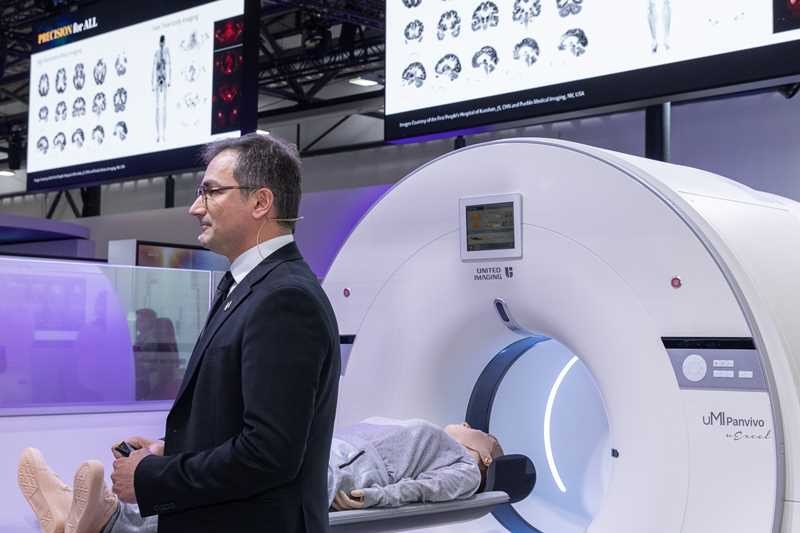
Economic and Global Impact of MRI Innovations
The global MRI market continues to expand, driven by technological improvements, aging populations, and increasing demand for non-invasive diagnostics. Market projections suggest steady growth through the next decade, with particular acceleration in Asia-Pacific regions as healthcare infrastructure develops.
Cost-reduction strategies, including AI-optimized workflows and helium-free designs, are making MRI more economically viable for smaller facilities. This democratization of advanced imaging has the potential to reduce healthcare disparities and improve outcomes worldwide.
What Patients Should Know About Current MRI Options
For patients, staying informed about MRI news means better preparation and more options. When discussing scans with your doctor, ask about available technologies, scan duration, comfort features, and whether contrast is necessary. Many facilities now offer wide-bore, quieter systems with entertainment options that make the experience far less intimidating.
Understanding advancements also helps patients advocate for appropriate imaging. In some cases, newer techniques may provide equivalent or better information with less time, lower costs, or reduced contrast use.
Looking Ahead: The Promising Future of MRI
The pace of innovation in MRI shows no signs of slowing. Researchers are exploring even higher field strengths, novel contrast agents, and deeper integration with artificial intelligence and other technologies. These developments promise to make imaging faster, more precise, and more accessible than ever before.
As MRI news continues to unfold, one thing remains clear: Magnetic Resonance Imaging will play an increasingly central role in modern medicine, helping clinicians detect diseases earlier, monitor treatments more effectively, and ultimately improve patient outcomes across countless conditions.
Conclusion: Staying Informed on MRI News
In today’s rapidly evolving healthcare landscape, keeping up with MRI news is more important than ever. From AI-enhanced workflows and helium-free systems to expanded clinical applications and improved patient comfort, recent advancements are making this vital imaging tool smarter, safer, and more widely available.
Whether you’re a healthcare professional, patient, or simply interested in medical technology, these developments represent exciting progress toward more personalized, efficient, and accessible care. As researchers and manufacturers continue pushing boundaries, MRI will remain at the forefront of diagnostic innovation, offering clearer windows into the human body and better paths to healing.
Stay curious, ask questions, and work with your healthcare team to understand how the latest MRI options might benefit your specific situation. The future of medical imaging is bright, and it’s advancing one breakthrough at a time.
FAQ
What is the latest breakthrough in MRI technology?
Recent highlights include AI-powered fast scanning, helium-free systems, and low-field portable MRI units that improve accessibility and patient comfort.
Are new MRI scans faster than traditional ones?
Yes, AI reconstruction techniques have significantly reduced scan times while maintaining or improving image quality in many cases.
How do helium-free MRI systems benefit patients and facilities?
They lower operational costs, reduce environmental impact, and make installation easier, helping expand access to MRI services.
Is MRI safe for patients with implants?
Modern MR-conditional devices and updated safety protocols have made MRI safer for many patients with implants, though thorough screening remains essential.
What should I expect during a modern MRI exam?
Most exams are now shorter, quieter, and more comfortable thanks to wider bores, entertainment systems, and advanced technology.
Other Article>>>MK677 UK: Complete Guide to MK-677, Legality, Benefits, and Risks
