


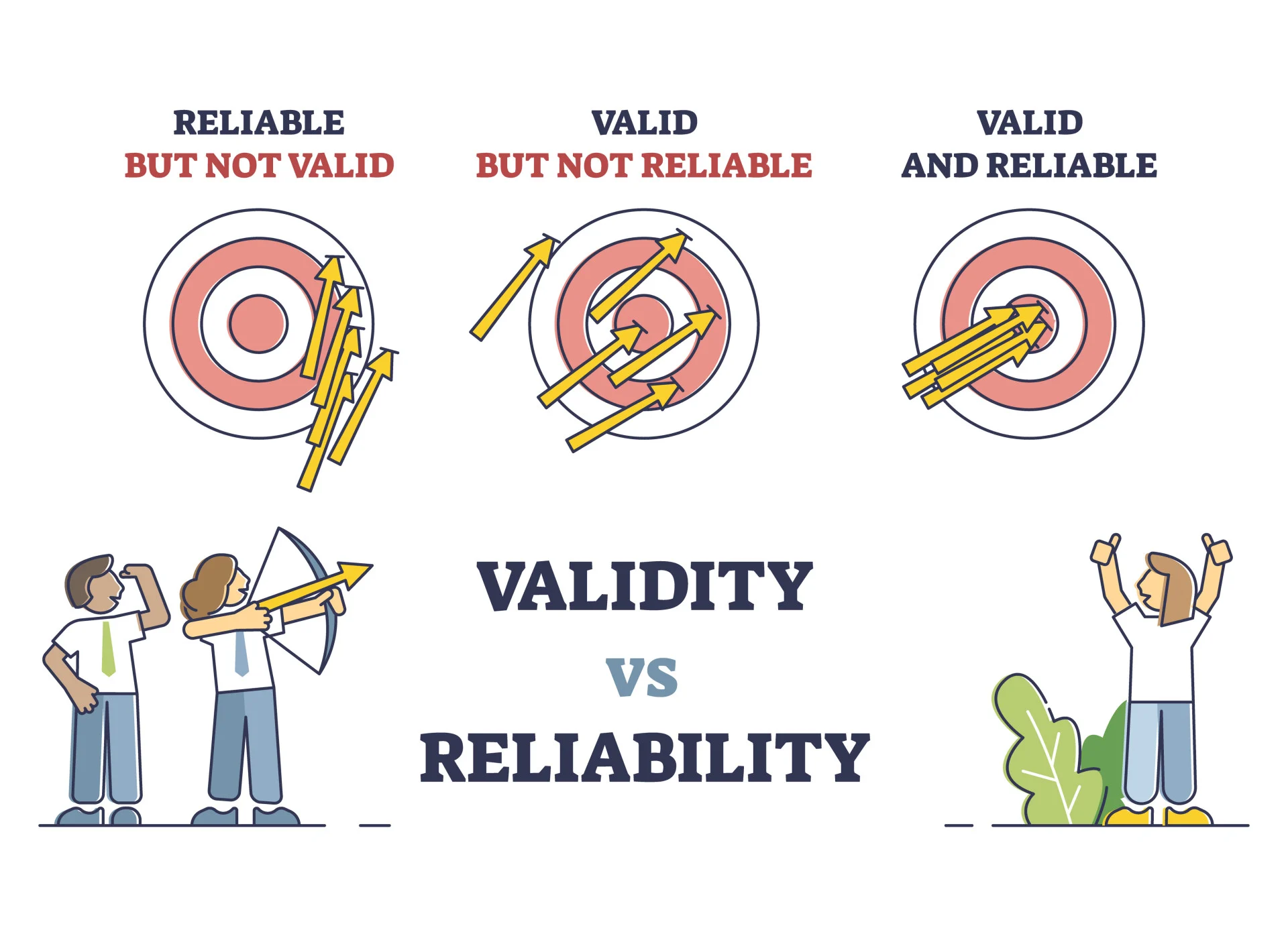
Validity vs reliability represents one of the most essential distinctions in research, measurement, and assessment. While people often use these terms interchangeably in everyday conversation, they address two fundamentally different qualities of any tool, test, or study. Understanding validity vs reliability helps students, professionals, and researchers produce credible work that stands up to scrutiny.
This comprehensive guide explores what each concept means, how they differ, why both matter, and how they apply across fields like psychology, education, healthcare, and social sciences. Whether you are designing a survey, evaluating a psychological test, or interpreting scientific findings, grasping validity vs reliability strengthens your ability to create and consume high-quality information.
What Is Reliability in Research and Measurement?
Reliability refers to the consistency and stability of a measure or research finding. When something is reliable, it produces similar results under consistent conditions, time after time. Think of it as the repeatability factor — if you run the same test multiple times, do you get roughly the same outcome?
In practical terms, a reliable bathroom scale gives you nearly identical readings when you step on it several times in a row. A reliable personality questionnaire yields consistent scores for the same person when taken a few weeks apart, assuming nothing major has changed in their life.
Researchers assess reliability through several approaches. Test-retest reliability checks consistency over time. Internal consistency examines whether different items in a questionnaire measure the same underlying concept. Inter-rater reliability evaluates agreement between different observers or coders.
High reliability reduces random error and builds confidence that the results are stable rather than fluctuating due to chance or poor measurement tools. However, consistency alone does not guarantee that the tool measures the right thing.
What Is Validity and Why Does Accuracy Matter?
Validity focuses on accuracy — whether a measure or study truly captures what it claims to measure. A valid instrument aligns with the intended concept or construct. It produces results that reflect reality in a meaningful way.
For example, a valid intelligence test actually measures cognitive abilities rather than something else, such as reading speed or cultural knowledge. A valid customer satisfaction survey genuinely reflects how people feel about a product or service instead of being influenced heavily by unrelated factors like the weather on the day they responded.
Validity comes in multiple forms. Content validity ensures the measure covers all relevant aspects of the concept. Construct validity checks alignment with theoretical expectations. Criterion validity examines how well the measure correlates with established standards or outcomes. Face validity, while more subjective, considers whether the tool appears to measure what it intends on the surface.
The Key Differences in Validity vs Reliability
The classic way to understand validity vs reliability is through a simple analogy: a reliable measure is like a clock that always runs five minutes fast. It consistently shows the wrong time, but the error is predictable and stable. A valid measure tells the correct time, even if it occasionally varies slightly due to real-world factors.
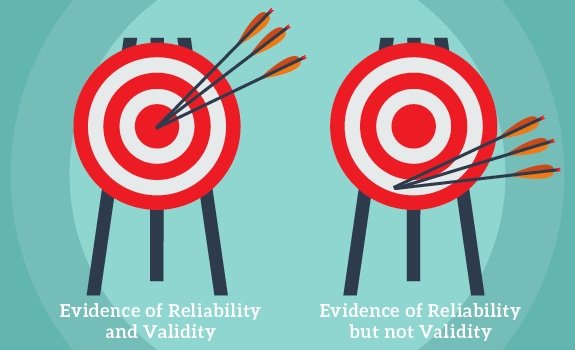
You can have high reliability without validity. A poorly worded survey might consistently produce the same biased responses, making it reliable but not valid. On the other hand, a valid measure is almost always reliable because accurate results tend to be reproducible. This relationship makes reliability a necessary but not sufficient condition for validity.
In validity vs reliability discussions, experts emphasize that reliability sets the foundation. Without consistency, it becomes nearly impossible to achieve meaningful accuracy. Yet focusing solely on reliability can lead researchers astray if they overlook whether they are measuring the right variables in the first place.
Real-World Examples of Validity vs Reliability in Action
Consider standardized testing in education. A reliable exam produces consistent scores for students with similar knowledge levels across different test administrations. However, if the questions favor students from certain cultural backgrounds, the test lacks validity for measuring general academic ability.
In healthcare, a reliable blood pressure monitor gives stable readings for the same patient under controlled conditions. Its validity depends on whether it accurately reflects true cardiovascular health rather than being skewed by movement, cuff size, or other variables.
Psychological assessments provide another clear illustration. A depression screening tool might reliably identify patterns of responses, but it only becomes valid if those patterns genuinely correspond to clinical depression rather than temporary stress or unrelated personality traits.
These examples highlight why professionals across disciplines must evaluate both aspects when developing or choosing measurement tools.
Why Validity vs Reliability Matters in Psychological Research
Psychology relies heavily on self-report measures, behavioral observations, and experimental designs. Here, validity vs reliability directly impacts the credibility of theories and treatments.
A reliable but invalid personality test might consistently sort people into the same categories, yet those categories could fail to predict real-world behavior or correlate with established psychological constructs. This undermines the entire body of research built on such tools.
Researchers address these challenges through rigorous validation processes, including pilot testing, statistical analysis, and peer review. Journals and ethics boards increasingly demand clear evidence of both validity and reliability before accepting studies for publication.
Internal link: For more on designing effective psychological studies, explore our guide on research methods best practices.
Applications in Education and Classroom Assessment
Teachers and educational policymakers constantly navigate validity vs reliability when creating or selecting assessments. A reliable quiz might produce consistent results across different classes, but it lacks validity if the questions do not align with learning objectives or fail to measure deeper understanding.
Standardized tests face ongoing scrutiny regarding cultural fairness and construct alignment. Educators who understand these concepts can advocate for better assessment tools and interpret results more thoughtfully. They recognize that a single low score might reflect measurement issues rather than actual student ability.
External resource: The American Educational Research Association provides valuable guidelines on assessment standards through their publications.
Validity and Reliability in Medical and Scientific Research
In medicine, unreliable measurements can lead to misdiagnosis or ineffective treatments. Invalid research findings might promote therapies that do not actually work or overlook important risk factors.
Clinical trials emphasize both concepts through standardized protocols, blinded procedures, and statistical validation. Reliability ensures results can be replicated across different sites and populations. Validity confirms that the study truly measures treatment effects rather than placebo responses or confounding variables.
The replication crisis in various scientific fields has highlighted the importance of strong validity and reliability practices. Journals now often require detailed reporting on measurement quality to strengthen scientific integrity.
Strategies for Improving Validity and Reliability
Researchers and practitioners can take concrete steps to strengthen both aspects. Start with clear operational definitions of the concepts being studied. Use established, previously validated instruments whenever possible rather than creating new ones from scratch.
Pilot testing helps identify problems early. Statistical techniques such as Cronbach’s alpha for internal consistency or factor analysis for construct validity provide quantitative evidence. Triangulation — using multiple methods or data sources — enhances overall confidence in findings.
Training observers and standardizing procedures reduces error and improves inter-rater reliability. Regular calibration of equipment maintains measurement consistency over time.
Common Challenges and Misconceptions
One frequent misconception involves assuming that reliability automatically guarantees validity. Another involves over-relying on face validity without deeper examination. Cultural and contextual factors can affect both qualities, making validation an ongoing process rather than a one-time achievement.
In qualitative research, traditional notions of reliability and validity adapt to concepts like credibility, transferability, and dependability. Yet the core principles remain relevant across methodologies.
The Interconnected Future of Research Quality
As technology advances with artificial intelligence, big data, and new measurement tools, validity vs reliability becomes even more critical. Algorithms trained on biased data might produce highly reliable but invalid results at scale.
Researchers must continue developing sophisticated validation frameworks that account for these emerging challenges. Interdisciplinary collaboration helps bring diverse perspectives to measurement issues.
Final Thoughts on Validity vs Reliability
Mastering validity vs reliability equips you to evaluate information critically and produce more trustworthy work. These concepts form the bedrock of credible research, effective assessment, and evidence-based practice across countless fields.
By prioritizing both consistency and accuracy, we move closer to genuine understanding and meaningful progress. Whether you are a student learning research methods, a professional conducting evaluations, or simply someone interested in how knowledge is created, paying attention to validity vs reliability enhances your ability to separate signal from noise in an increasingly complex information landscape.
The journey toward better measurement never truly ends, but the rewards — more reliable knowledge and valid insights — make the effort worthwhile. Keep questioning, testing, and refining, and you will contribute to higher standards of research excellence.
FAQ
What is the main difference between validity and reliability?
Reliability is about consistency — getting similar results under the same conditions. Validity is about accuracy — whether the measure truly captures what it intends to measure.
Can a test be reliable but not valid?
Yes. A test can consistently produce the same results (reliable) while failing to measure the intended concept (not valid). However, a valid test is generally reliable.
Why are validity and reliability important in research?
They ensure research findings are trustworthy, replicable, and meaningful. Without them, conclusions may be misleading or unusable for decision-making.
How do researchers measure reliability?
Through methods like test-retest, internal consistency checks (e.g., Cronbach’s alpha), and inter-rater agreement.
What are the main types of validity?
Key types include content validity, construct validity, criterion validity, and face validity, each addressing different aspects of measurement accuracy.
Read More:
Is Obernaft for Free? Everything You Need to Know Before Using Obernaft
